Roofing contractor in San Bernardino Mountains, CA

The San Bernardino Mountains rise northeast of the valley floor, with communities like Big Bear Lake, Lake Arrowhead, Crestline, Running Springs, and Twin Peaks sitting between 4,000 and 7,000 feet in elevation. Parts of the range receive more than 40 inches of annual precipitation, and winter snowfall is common above 3,000 feet, creating freeze-thaw cycles that no valley-floor roofing system is designed to handle. Many properties here were originally built as seasonal cabins without the structural specifications that year-round occupancy and modern snow loads require. Steep roof pitches, heavy timber framing, and pine-needle accumulation in valleys and gutters define the roofing environment across these mountain communities.

Call
Service Location

San Bernardino Mountains, CA

CA Service Area

No extra travel fees for this area

Communities we serve

Big Bear Lake Lake Arrowhead Crestline Running Springs Twin Peaks Blue Jay Sugarloaf Green Valley Lake
  • Roofing Specialist
  • Serving Inland Empire
  • Direct Communication
  • Transparent Pricing
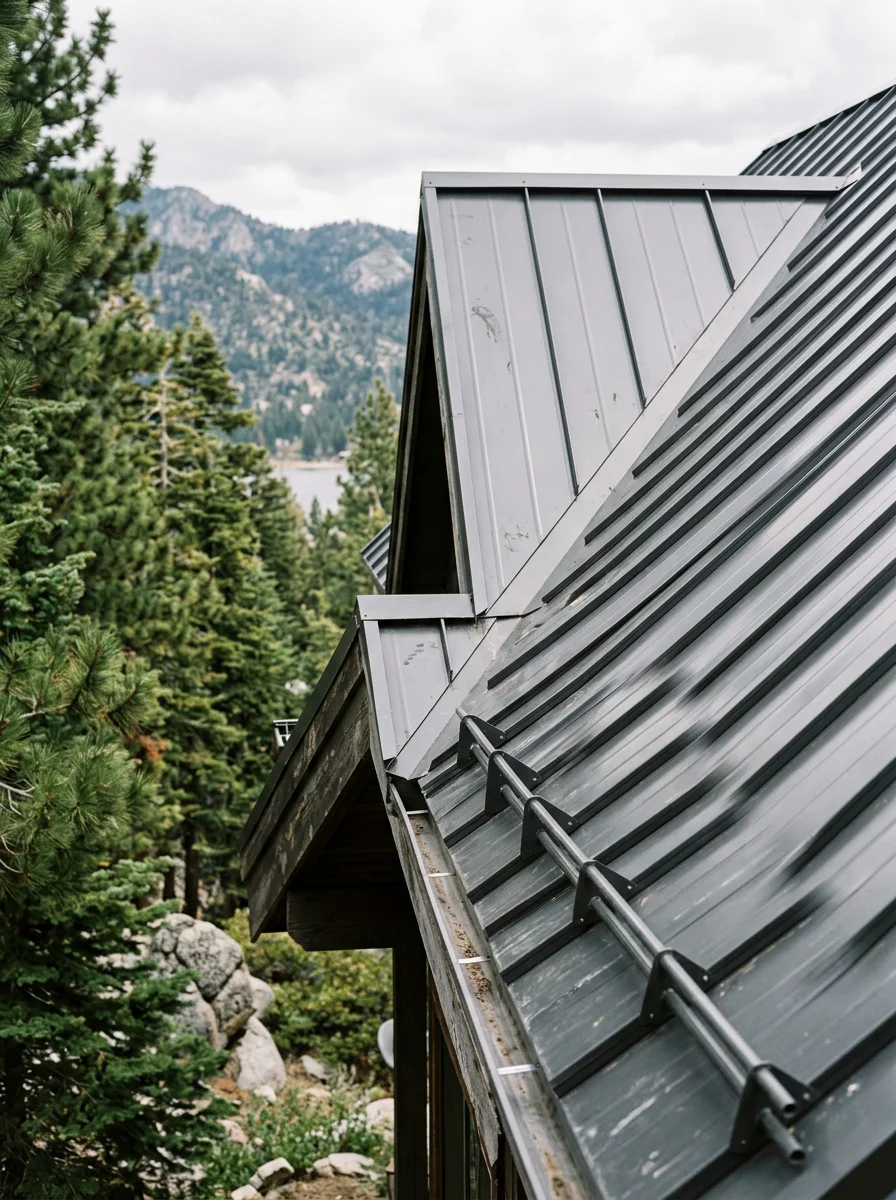
Portrait view of a standing seam metal roof installation on a mountain home near Big Bear Lake, showing the vertical panel seams and snow guards against a pine forest backdrop.

San Bernardino Mountains, CA

Roofing Contractor

Snow-Load and Freeze-Thaw Roofing Done Right Above 4,000 Feet

Mountain roofing is not valley roofing moved uphill. At Big Bear Lake and Lake Arrowhead elevations, freeze-thaw cycles work water under shingles and through flashing gaps that would stay sealed at lower altitudes. We account for this in material selection and installation detail on every mountain job we quote.

Many San Bernardino Mountains properties were built as weekend cabins in the 1950s through 1970s, then converted to year-round use without structural upgrades. Roofs on these properties often carry lighter sheathing and lower-pitch designs than a full-time mountain residence requires. We identify these conditions in the quote so the installed system matches actual occupancy and snow exposure.

Standing seam metal is one of the strongest choices for steep mountain roofs because the concealed fastener system does not create penetration points that freeze-thaw cycles can exploit. Shingles remain a practical option on properly structured roofs when installed with the correct underlayment for cold and wet conditions. We carry both systems and quote the one that fits the structure and the site.

At a glance

  • Locally owned and operated
  • Free written estimates with no obligation
  • Premium options most contractors don't carry — we explain the differences honestly
  • Responsive scheduling and clear communication from estimate to completion
Call

Every service, available in San Bernardino Mountains, CA

New roof installs in the San Bernardino Mountains require steep-slope material selection and structural review because snow load at these elevations is a real design factor. Standing seam metal roofing is well-suited to mountain properties because it sheds snow cleanly and handles the freeze-thaw expansion cycle without seam failure. Shingle re-roofs on older cabins and vacation homes are common, particularly where original construction used lighter materials not rated for sustained snow accumulation. Roof repairs after winter storm damage — including ice dam intrusion, flashing failure at chimneys, and cracked or displaced shingles — are a recurring need across communities from Crestline to Big Bear Lake.

What San Bernardino Mountains, CA customers say.

Reviews are temporarily unavailable. Please check back soon.

Worked with us?

Leave a Review

Serving San Bernardino Mountains, CA

Free on-site estimate. No commitment required.

Our crew knows San Bernardino Mountains, CA. We will show up on time, assess the job honestly, and give you a clear written number before asking you to decide anything.

Call

Roofing Contractor FAQ for San Bernardino Mountains, CA

Common questions from San Bernardino Mountains, CA customers about our services, process, and coverage.

Yes. Big Bear Lake sits above 6,700 feet and receives significant seasonal snowfall. A roof that is not structurally matched to local snow load can experience deck deflection or fastener pull-through over time. We review the existing structure as part of the quote process and flag any concerns before the job is scheduled.

Ice dams form when heat escaping through the roof deck melts snow, which then refreezes at the cold eave overhang and backs water under shingles. The right fix combines proper attic ventilation, an ice-and-water shield underlayment at the eaves, and a roofing material that sheds melt water rather than trapping it. A new roof installed with these details significantly reduces ice dam risk.

Standing seam metal is one of the best options for steep mountain roofs. The concealed fastener system eliminates the exposed penetration points that freeze-thaw cycles attack on screw-down panels. Metal also sheds snow and pine debris cleanly, which reduces the load buildup and moisture retention that shortens shingle life in mountain conditions.

Wood shake is no longer permitted as a new roofing material in most California fire-hazard severity zones, which includes much of the San Bernardino Mountains. Re-roof options include architectural shingles with a Class A fire rating, standing seam metal, or concrete tile where the structure supports the weight. We identify the right system for your specific property in the written quote.

Still have questions?

Call us directly. Real answers, no scripts.

Call

Proudly Based in San Bernardino, CA

Stop by, call, or book online — we're always nearby when you need us.

Phone

Hours

Get a Free Estimate